
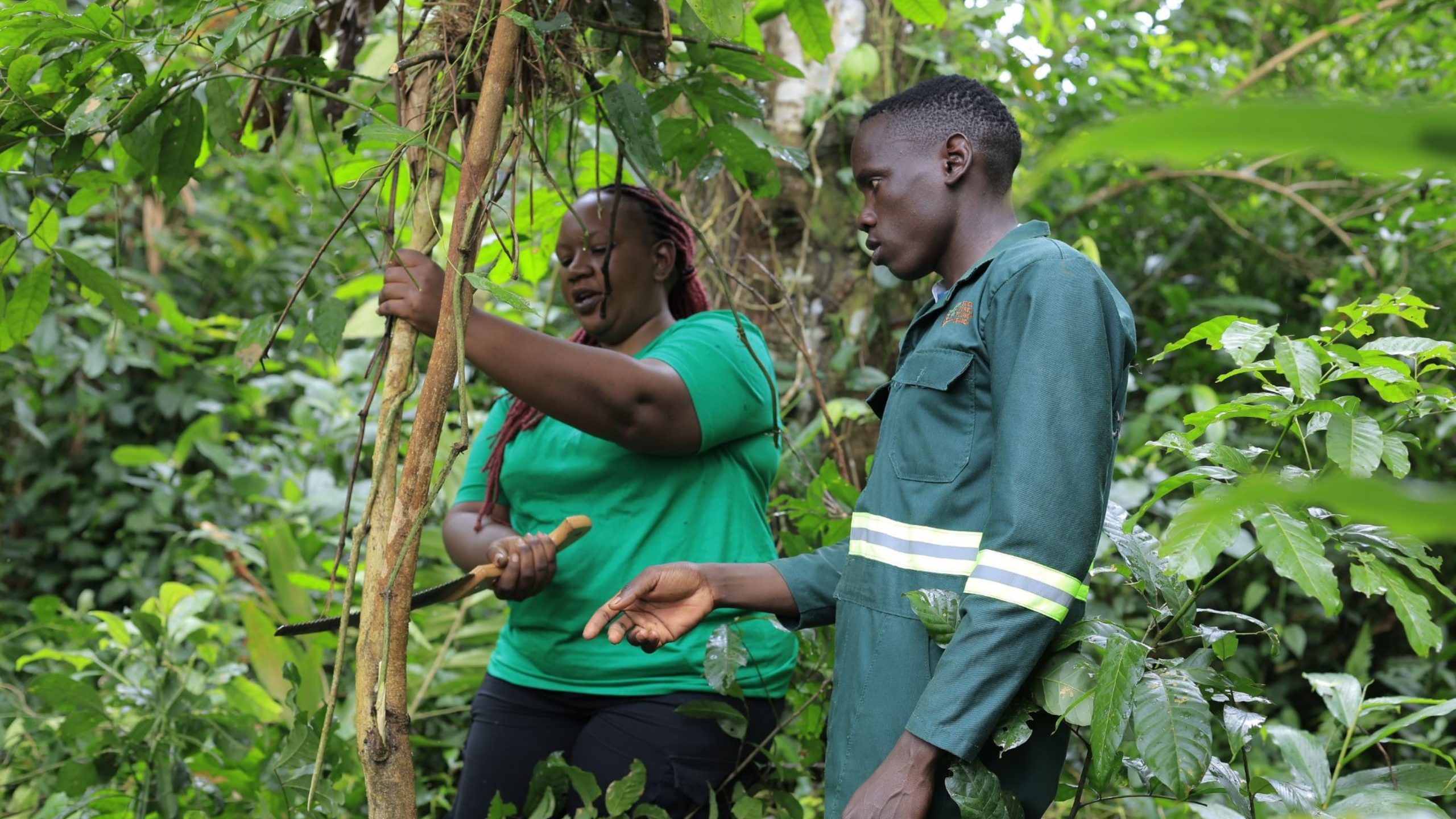
In the Jubyia Forest in Uganda, a low-cost and sustainable land restoration technique known as Farmer Managed Natural Regeneration (FMNR) is being implemented in degraded areas. By regenerating trees from existing stumps and strengthening rural farmer families the forest is coming back to life. The Good Forest Uganda (GFU), in partnership with Fairventures Worldwide and with the generous support of Heidehof Stiftung GmbH, has launched a vital restoration initiative in the Jubiya Central Forest Reserve, a forest in Masaka District, one of Uganda’s most degraded regions.
How FMNR Works to Restore the Jubiya Forest
Jubiya Central Forest Reserve (JCFR) has suffered severe degradation over the years, losing almost 20% of the forest. But can forgotten tree stumps hold the key to restore thousands of hectares of degraded forest?
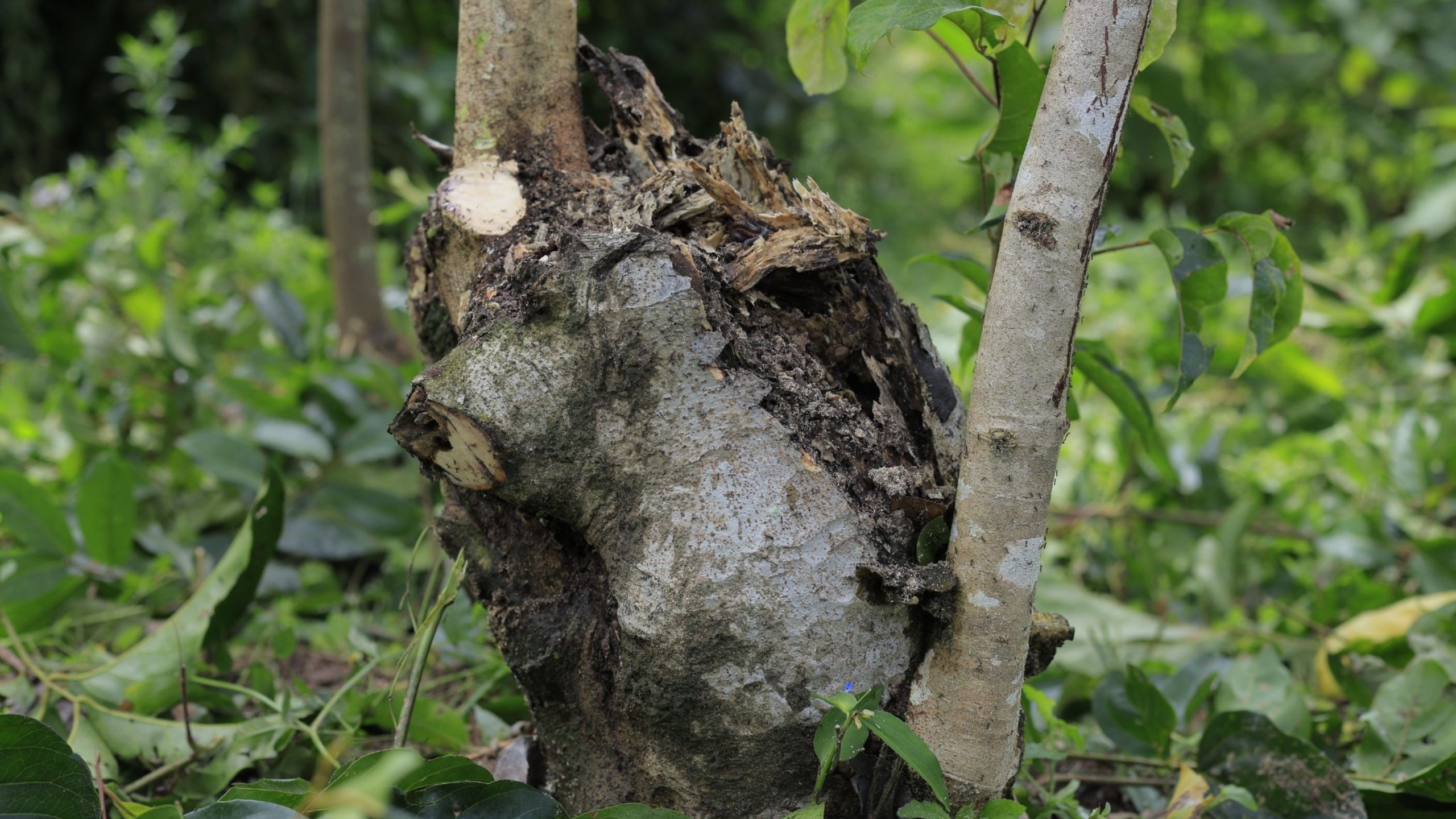
“We see the potential from them to resprout and become trees, ” says Asiat, the project coordinator for FMNR at GFU. Instead of planting new seedlings from scratch, which can be expensive and comes with numerous challenges surrounding mortality, FMNR actually protects the powerful, existing root systems of harvested or cleared trees.
When a tree is cut down, the living root system underground often does not die. Instead, it starts up a dense bush of new shoots from the remaining stump. This brilliant, low-cost ecological approach turns these wild shoots into a thriving new forest through a simple, three-step management process: selection, pruning and protection. By gradually reducing the number of shoots and focusing the tree’s energy on just a few dominant stems, a bushy stump is transformed back into a tall, valuable tree in a fraction of the time it would take to grow from seed.
Empowering Local Communities to Bring the Forest Back
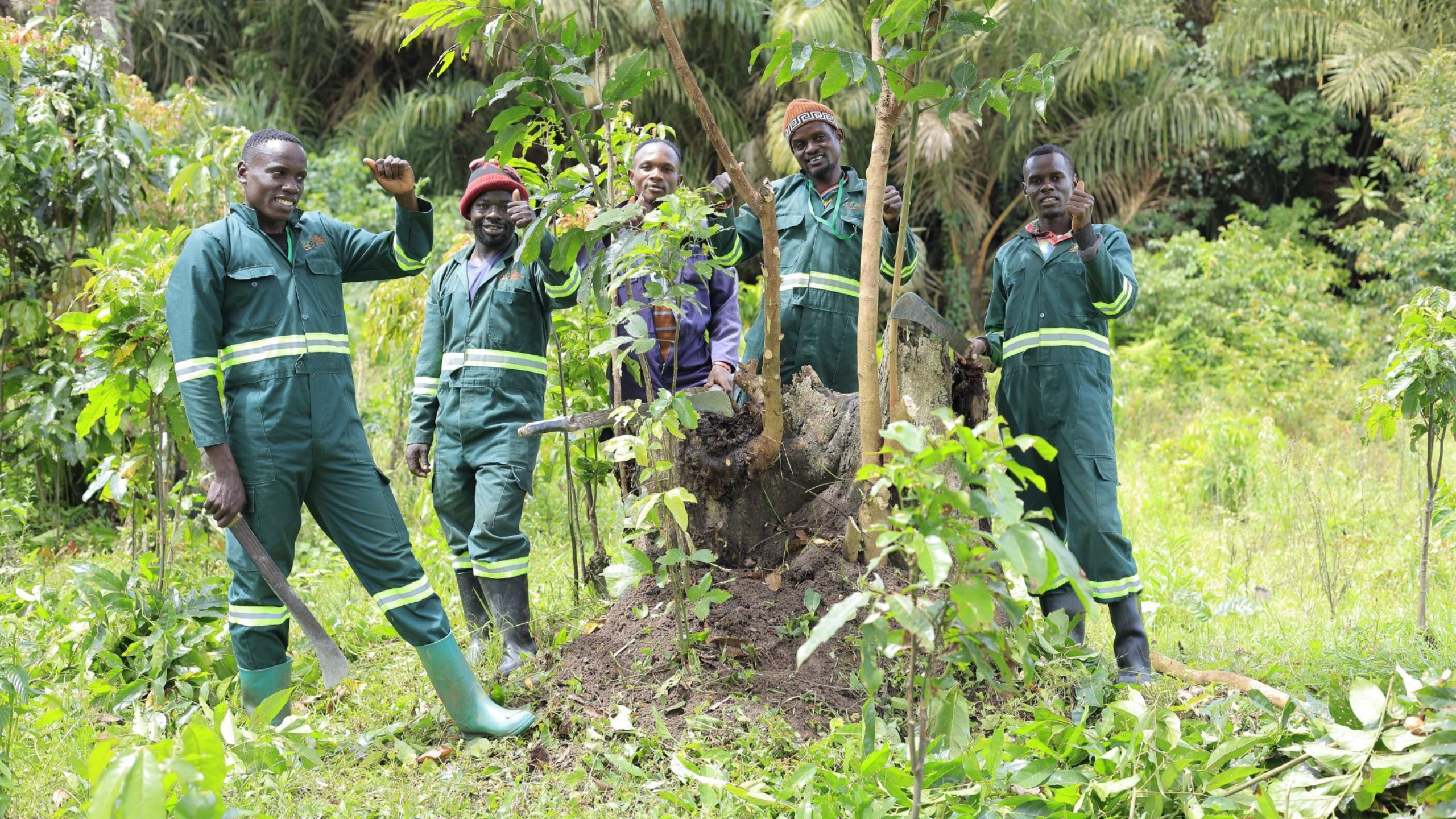
Out of the reserve’s total area of 4,571 hectares, the project is using FMNR to restore 1,000 hectares of degraded forest in collaboration with local communities.
Farmers are at the heart of this sustainable approach. They learn to recognize the value of trees and how trees can improve their livelihoods and well-being. Through practical training in FMNR, they apply the technique in the field by selecting, pruning, thinning, and protecting tree sprouts to encourage healthy regrowth. “The future I see is a community-led restoration, where they can easily get involved, practicing on their farmland while also protecting Jubiya Central Forest Reserve” , says Richard, project assistant at GFU.
As Australian agronomist Tony Rinaudo, who developed the FMNR approach, emphasized, people’s attitudes are key to restoring landscapes: When properly applied, FMNR can become a bridge between improved livelihoods and a renewed relationship with nature.
By empowering local communities in Masaka District, while building on the natural resilience of the landscape, the initiative is supporting the recovery of biodiversity, improving soil health, and demonstrating that nature already has the blueprint for its own recovery – it just needs a helping hand.