
Sustainability requires transparency – what the new EmpCo Directive changes
Anyone who talks about sustainability today bears a responsibility. Not only for their own actions, but also for the words they use to discuss it. Terms such as ‘sustainable’, ‘climate-neutral’ or ‘environmentally friendly’ are now everywhere – yet it is not always clear what they actually mean.
After all, sustainability is no longer a niche topic. More and more companies are communicating about climate action, environmental protection and social responsibility. At the same time, consumers are finding it increasingly difficult to assess which claims are actually credible.
The more frequently such claims are used, the more important the question becomes: what do they actually mean?
This is precisely why transparency is becoming increasingly important. It is not grandiose promises that build trust, but transparent information and honest communication about what has been achieved – and what has not.
This is precisely where the European Union’s new ‘Empowering Consumers for the Green Transition’ Directive (EmpCo) comes in. It has a clear objective: environmental and sustainability claims should be verifiable, auditable and transparent. Vague advertising claims without a solid basis are set to become a thing of the past. In doing so, the directive not only strengthens consumer protection but also creates fairer conditions for companies that already communicate their sustainability performance transparently.
For us at Fairventures, this development is therefore not a challenge but a confirmation of what we have believed in for many years: sustainability requires credibility. And credibility arises where claims are based on robust data and communicated transparently.
What exactly is changing?
Greenwashing has increased significantly in recent years. Studies by the European Commission show that more than half of all environmental claims examined were vague, misleading or insufficiently substantiated. This undermines trust and puts companies at a disadvantage that provide well-founded and verifiable evidence for their environmental claims. With the EmpCo Directive, the EU aims to tackle precisely this problem and harmonise the rules on sustainability communication across Europe.
From 27 September 2026, stricter requirements for environmental and sustainability claims will apply in EU Member States. General environmental and sustainability claims, such as ‘environmentally friendly’, ‘climate-friendly’ or ‘sustainable’, may no longer be used without specific explanation or recognised evidence. The focus is always on the same principle:
Anyone who claims to be sustainable must be able to provide verifiable evidence of this.
Statements about future environmental targets must also be backed up by realistic transformation plans with measurable interim targets and independent verification. At the same time, the requirements for sustainability labels are being significantly tightened; they must meet specific criteria and be based on transparent certification systems.
The EmpCo Guidelines are not intended to deter companies from talking about sustainability. On the contrary: they establish a clear framework for credible sustainability communication and call for greater transparency, precision and accountability.
Why we welcome this development
For Fairventures, this does not represent a fundamental change of direction. Many of the requirements that the EmpCo Directive will impose in future have long been an integral part of our approach to communication. We deliberately avoid making sweeping environmental promises and instead strive to present our work as concretely and transparently as possible. We explain how our agroforestry systems work, the role that smallholder farmers play in them, and how environmental and social impacts complement one another.
We are already helping companies to communicate their commitment to good forests and the climate in a transparent and comprehensible way. We provide robust impact data, work together to develop clear wording and communication materials, and demonstrate how environmental and social impacts can be explained credibly. This results in sustainability communication that builds trust and meets the requirements of the EmpCo guidelines.
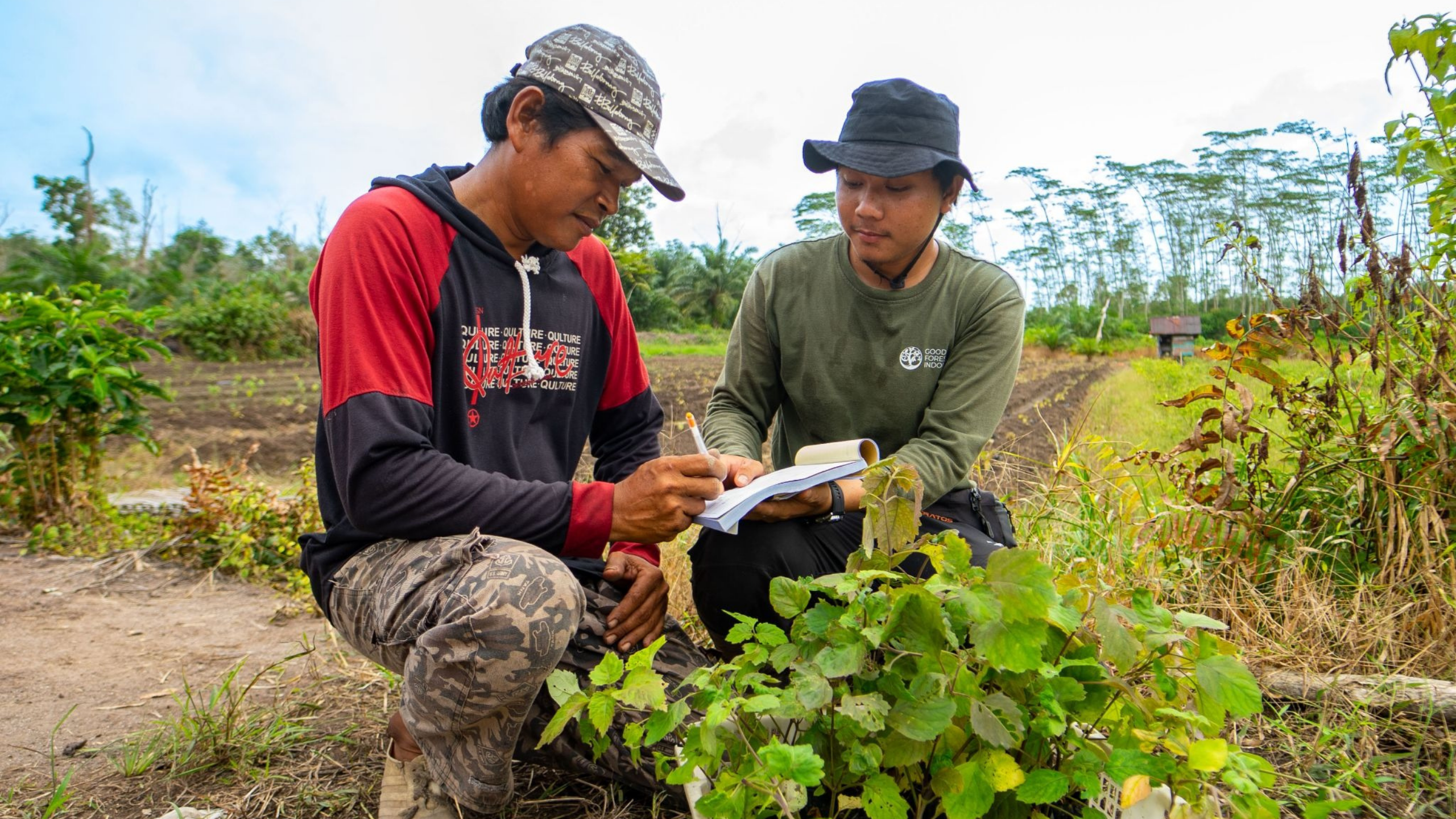
Transparency is a central component of our work. After all, not every seedling planted automatically grows into a healthy tree. That is why we document not only that trees are being planted, but also how they grow. With our single-tree monitoring via the TREEO app, we document not only the plantings but also how the trees develop over the coming years.

The data we have collected enables us to identify where different tree species thrive best. This has allowed us, for example, to increase the survival rate in Uganda to over 80 per cent, and to generate robust data rather than simplistic promises of success.
In addition, we publish annual impact reports, explain our methods and speak openly about the challenges we face. Creating impact is rarely straightforward – and that is precisely why it should not be oversimplified when we communicate about it.
We are convinced: Good Forests are Climate Solutions.
Responsible reforestation means far more than simply planting trees. It requires long-term collaboration with smallholder farmers, scientifically sound methods and transparent impact measurement. This is precisely what we intend to continue championing in the future.
Because real climate action requires not only meaningful action, but also language that reflects its true impact.