
Empowering smallholder farmers in Bwera, Uganda
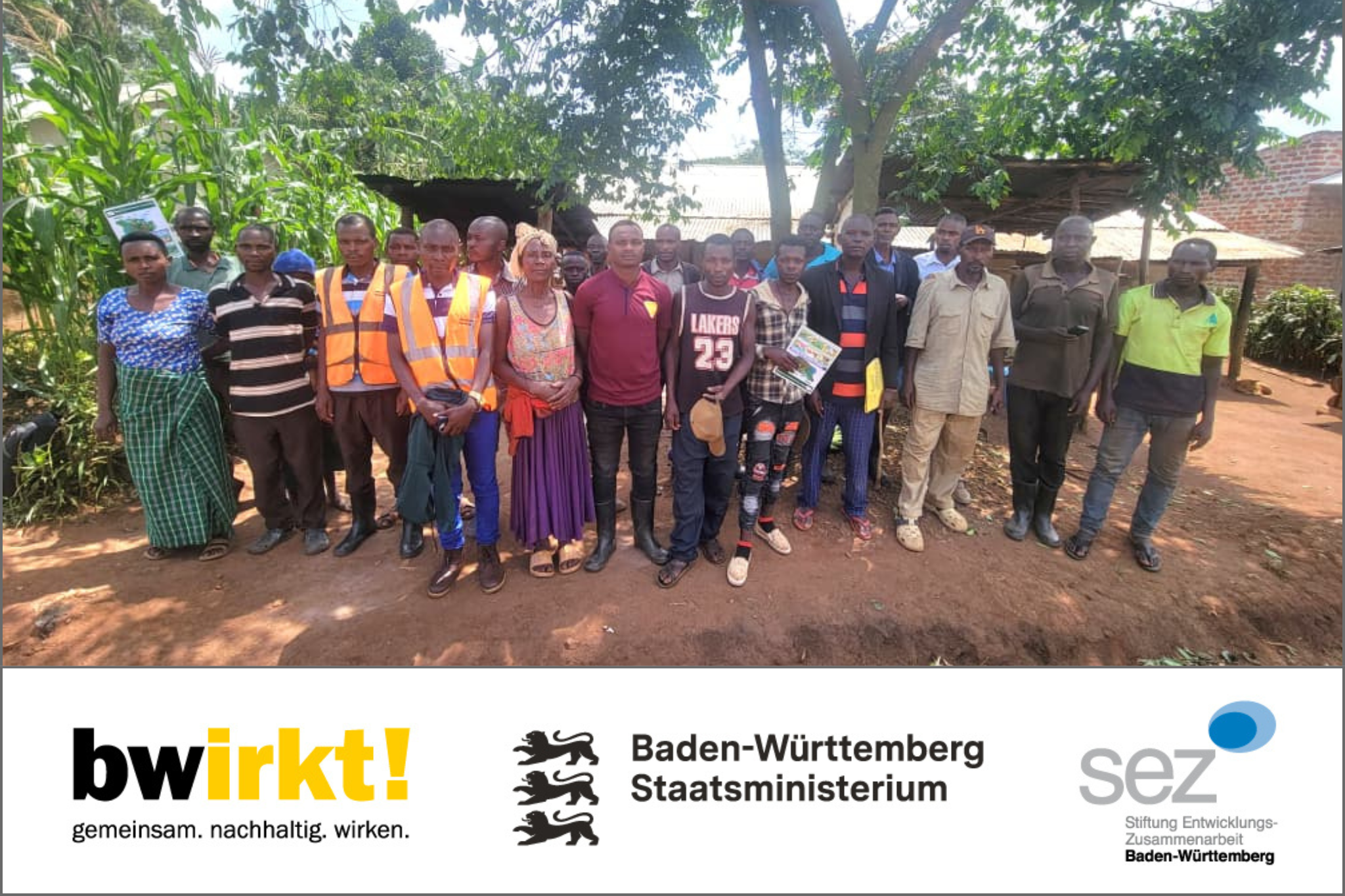
Bwera is located in the Kasese District in western Uganda. Nearly all residents of the community rely on agriculture for their livelihood and are heavily dependent on rainfall. However, the rainy seasons are becoming increasingly unpredictable, posing major challenges for the local population. Harvests are inconsistent, income opportunities vary greatly, and uncertainty is growing.
This is where Fairventures drives change: By distributing free seedlings and providing targeted training on agroforestry practices, the local team provides smallholder farmers with practical knowledge. In addition to fast-growing native tree species that improve the microclimate in the fields, the team also distributes fruit tree seedlings that provide food and income opportunities. This helps alleviate the effects of climate change.
The implementation in Bwera was made possible with financial support from the State Parliament and the State Ministry of Baden-Württemberg through the Stiftung Entwicklungs-Zusammenarbeit Baden-Württemberg (SEZ).
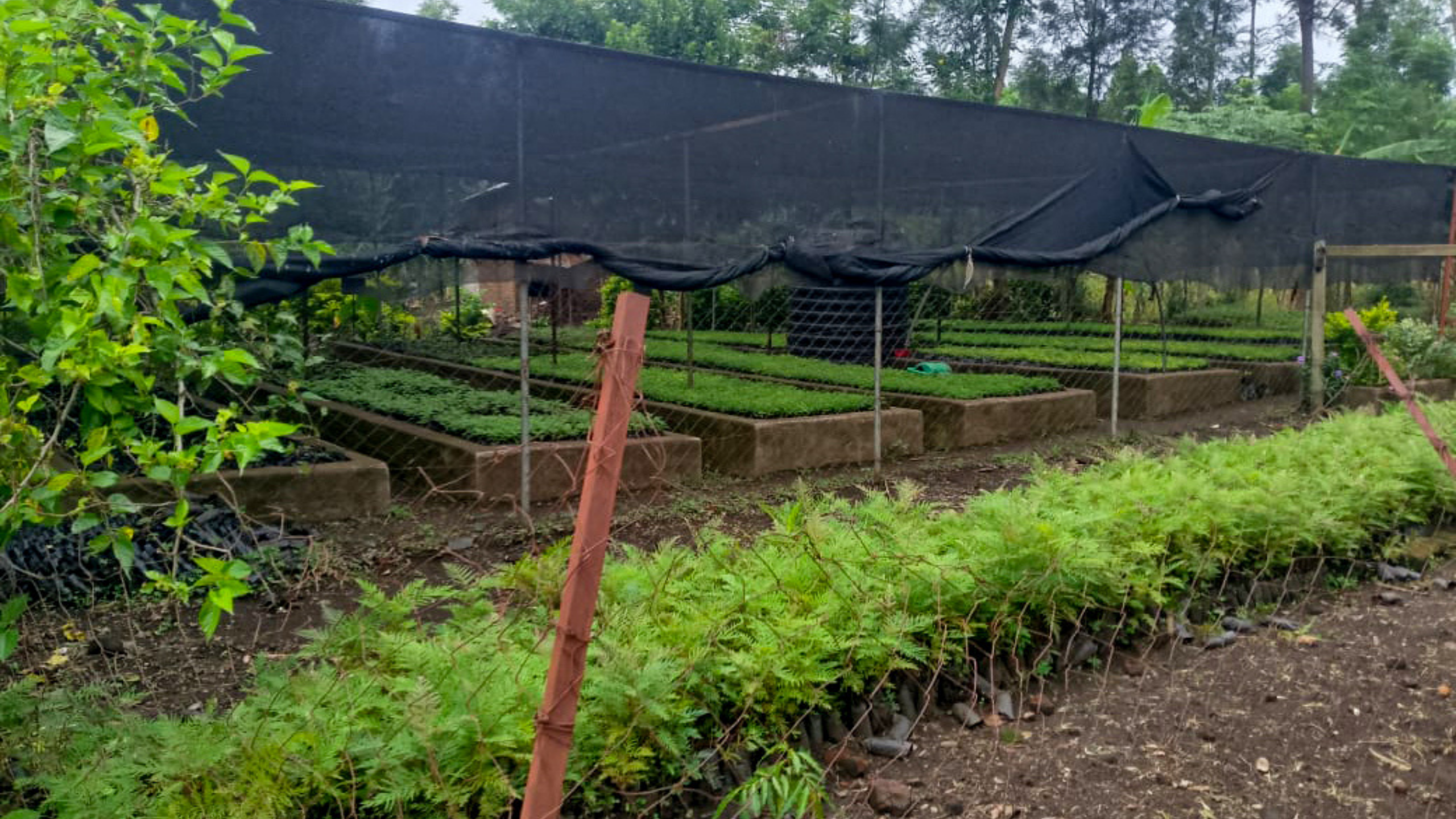
Thanks to the support, a total of 46 smallholder farmers were trained in Farmer Field Schools in 2025. In addition, the local nursery was able to produce seedlings.
Due to efficiency improvements in the nursery processes, seedling production was even significantly increased: instead of the originally planned 15,000 seedlings, over 48,000 seedlings were produced. These were distributed not only to smallholder farmers but also to local institutions such as schools and churches.
Farmer Field Schools: Combining Theoretical and Practical Knowledge
The team in Uganda works closely with a local initiative named Bwera Farmers Group. The fact that the group is deeply rooted in the local community boosts interest in the activities being carried out and fosters trust.
In what are known as Farmer Field Schools, theoretical knowledge is directly combined with hands-on exercises. Among other things, participants learn how cover cropping works, how to integrate trees into existing agricultural systems, and how to maintain them over the long term.
What makes this especially powerful is that the knowledge gained does not remain solely with the participants. It is passed on within families and beyond, throughout the community. This creates advocates who share their knowledge and inspire others to embrace sustainable agriculture and reforestation.

Next Step: Distributing the Seedlings
After successfully completing the training sessions, which last several days, the seedlings are distributed at the start of the rainy season. These seedlings are grown in the local nursery over several months beforehand to ensure high quality.
From this point on, knowledge is put into action. Trained smallholder farmers start establishing agroforestry systems right away and strengthen the resilience of their fields.

A new Perspective on Reforestation
Reforestation is about much more than just planting trees. Our holistic approach integrates ecological, social, and economic considerations: Through training, local structures, and long-term support, we develop sustainable solutions based on the needs of local communities.
On the ground, the Forestry Field Coordinators are responsible for supporting smallholder farmers. They also maintain close contact with the communities, act as direct contact persons, and provide assistance with everyday questions and challenges. We would like to thank the team in Uganda for their dedication and the Stiftung Entwicklungs-Zusammenarbeit Baden-Württemberg for its financial support of our work!