
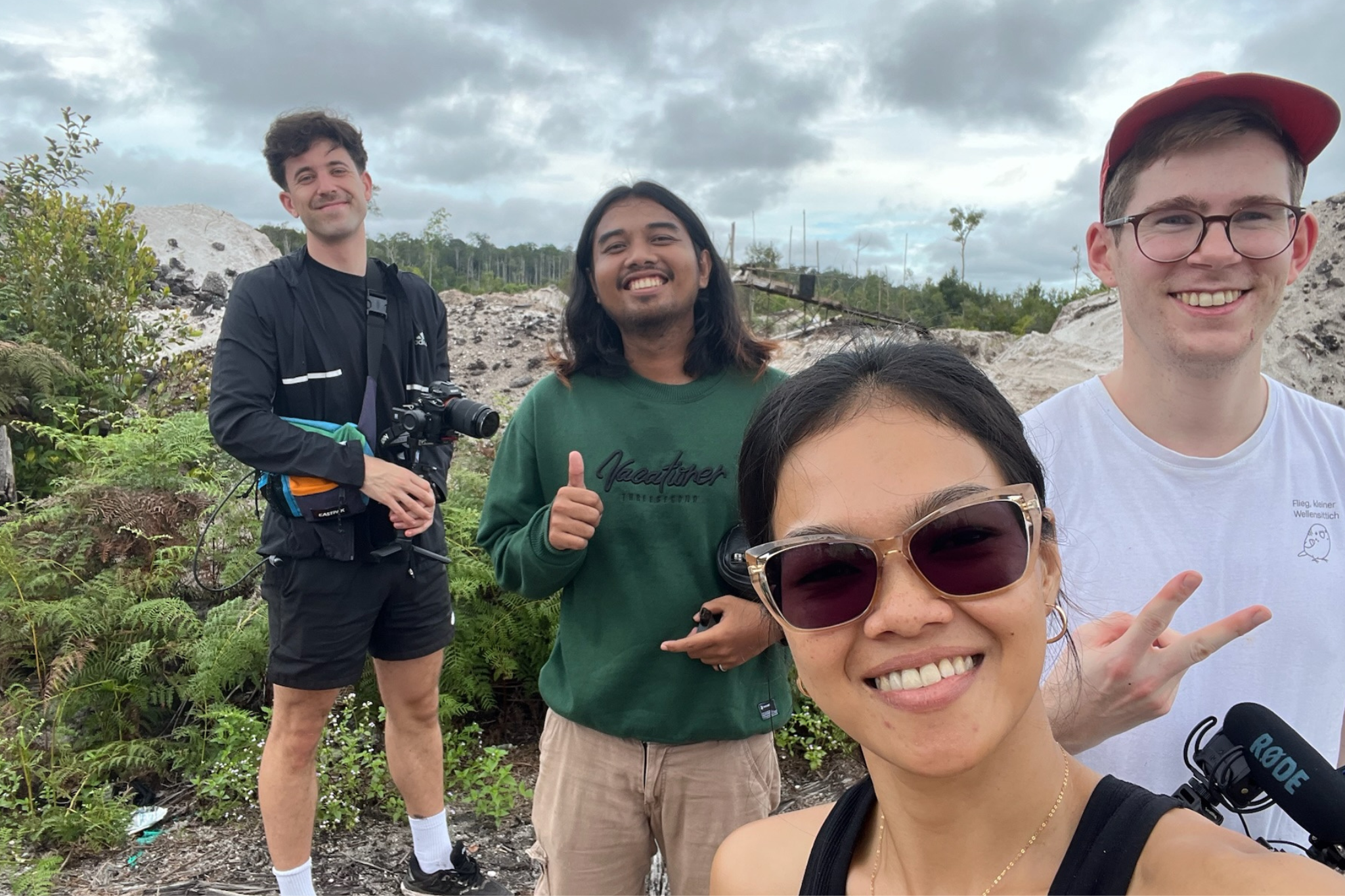
In many parts of the Global South, the climate crisis is not just a future threat, but a reality that is happening already. Communities that contribute the least to the climate crisis, bear the brunt of its impact. This is why we believe that this injustice cannot be confined to a regional issue. Voices from the South must be given space in international conversations.
Climate Stories is a platform for young, committed individuals around the world whose voices and perspectives have not been heard so far. In digital encounters, they share their stories and offer insights into their everyday lives and their commitment to climate justice.
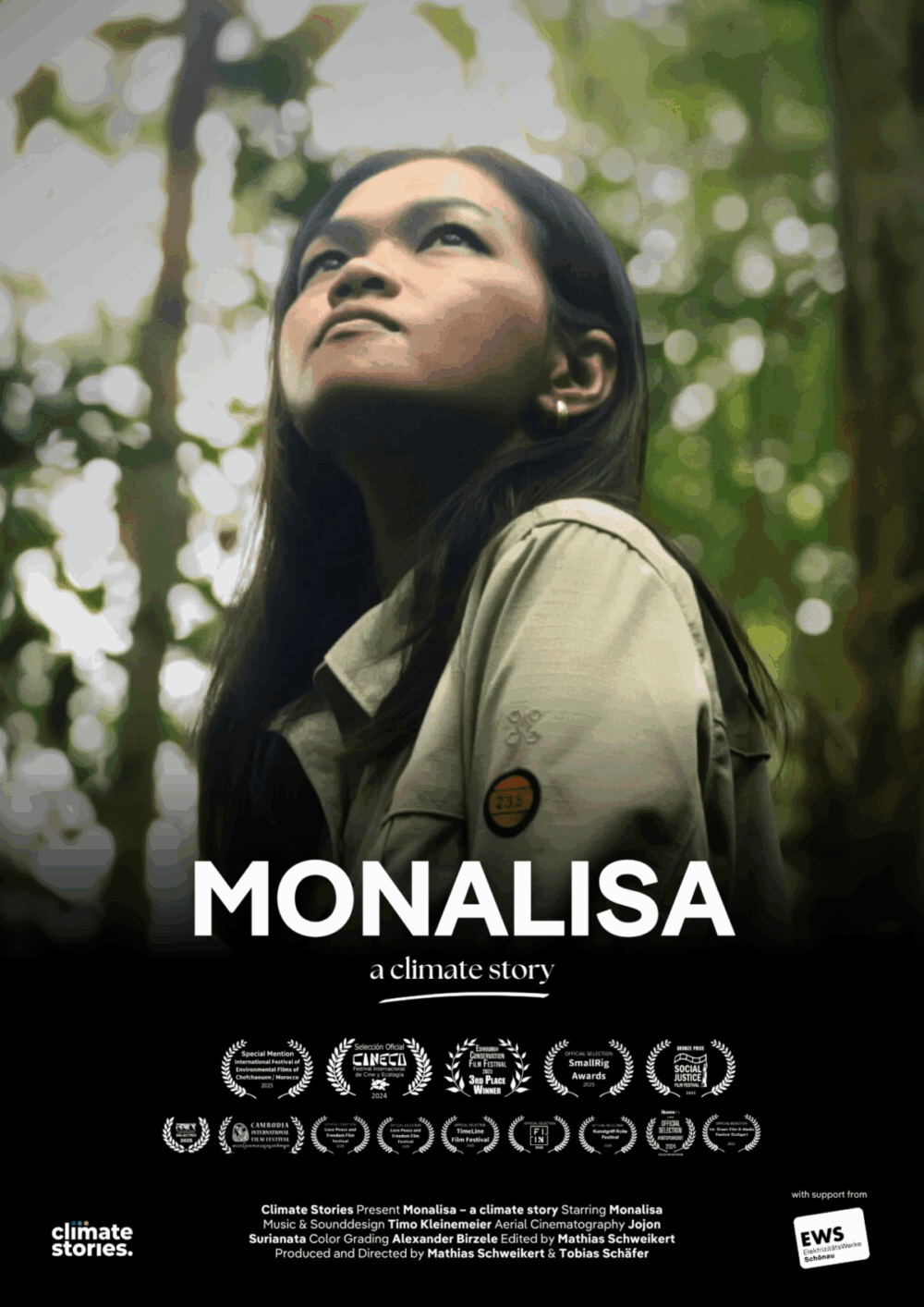
With ‘Monalisa, a Climate Story.’ the reality of living in Indonesia is presented in a short documentary. This film shows how the climate crisis is already shaping biographies in the Global South. It portrays a young indigenous woman from the Dayak people who joins a reforestation organisation and gives everything to find a solution to the conflict in her community that does justice to both people and nature.
This article invites you to take a closer look at the background of the film’s production and the filmmakers’ views on the current climate crisis. Their voices are captured and summarized in the interview below. The interview was carried out by the communications team at Good Forest Indonesia.
Before we talk further, may you introduce yourselves to the audience?
Monalisa: My name is Monalisa, and I am the founder of the Good Forest Indonesia Foundation (GFI). I began my career with Fairventures Worldwide in early 2018 as part of their team in Central Kalimantan. In 2023, I led the handover of Fairventures’ Indonesia office into Good Forest Indonesia, which now operates as an independent organization. I am also a proud member of the Dayak tribe, the Indigenous people of Kalimantan.
Mathias: My name is Mathias, and I have been working for Fairventures since 2020. I started as a Communications Officer and worked closely with Monalisa, who was responsible for Communications in Indonesia. That’s when I first learned about her story. Since 2023, I’ve been working as the Project Manager of Climate Stories (a project by Fairventures).
Q: What inspired Mathias & Tobi to make this film?
Mathias: I believe that in the debate about the climate crisis, we need more role models like Monalisa who are visible and show that it is possible to make a difference. When people hear her story, they are usually moved and inspired. With the film, we want to encourage them to take action.
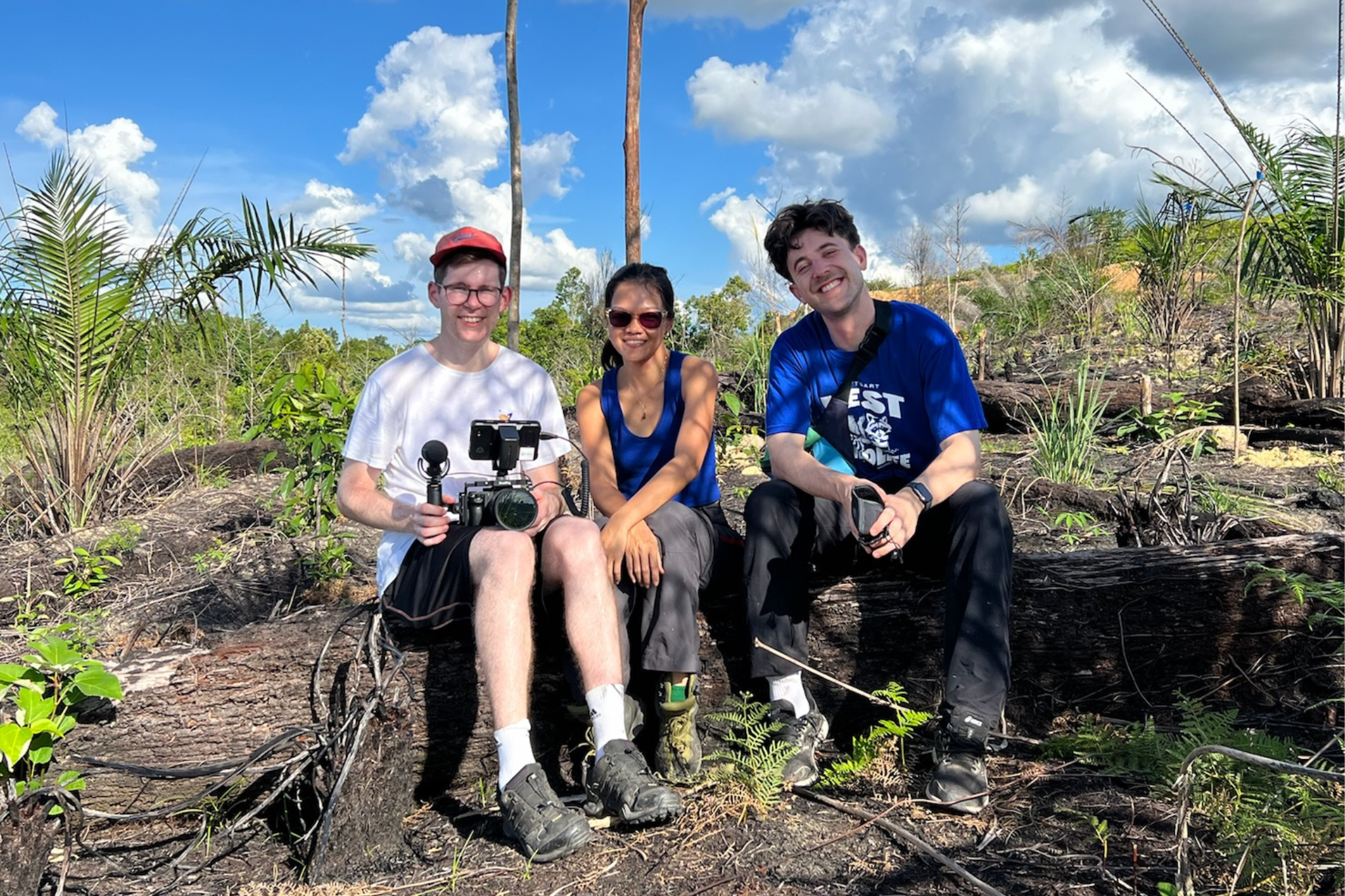
Q: Since this film focuses on Kalimantan, could you elaborate on the main challenges faced by communities in Kalimantan?
Monalisa: Growing up in Kalimantan, I’ve seen how much life here has changed. The forests that once felt endless are now mostly gone, replaced by plantations, mines, and industrial sites. When the forest disappears, it’s not just nature that’s lost, people lose their way of life too. For us, the forest has always been our source of food, water, medicine, and identity. Without it, many families now struggle just to make ends meet. We’ve had to adapt to an industrial way of living, something that doesn’t really fit who we are. Some people find work in plantations or towns, but it’s never easy.
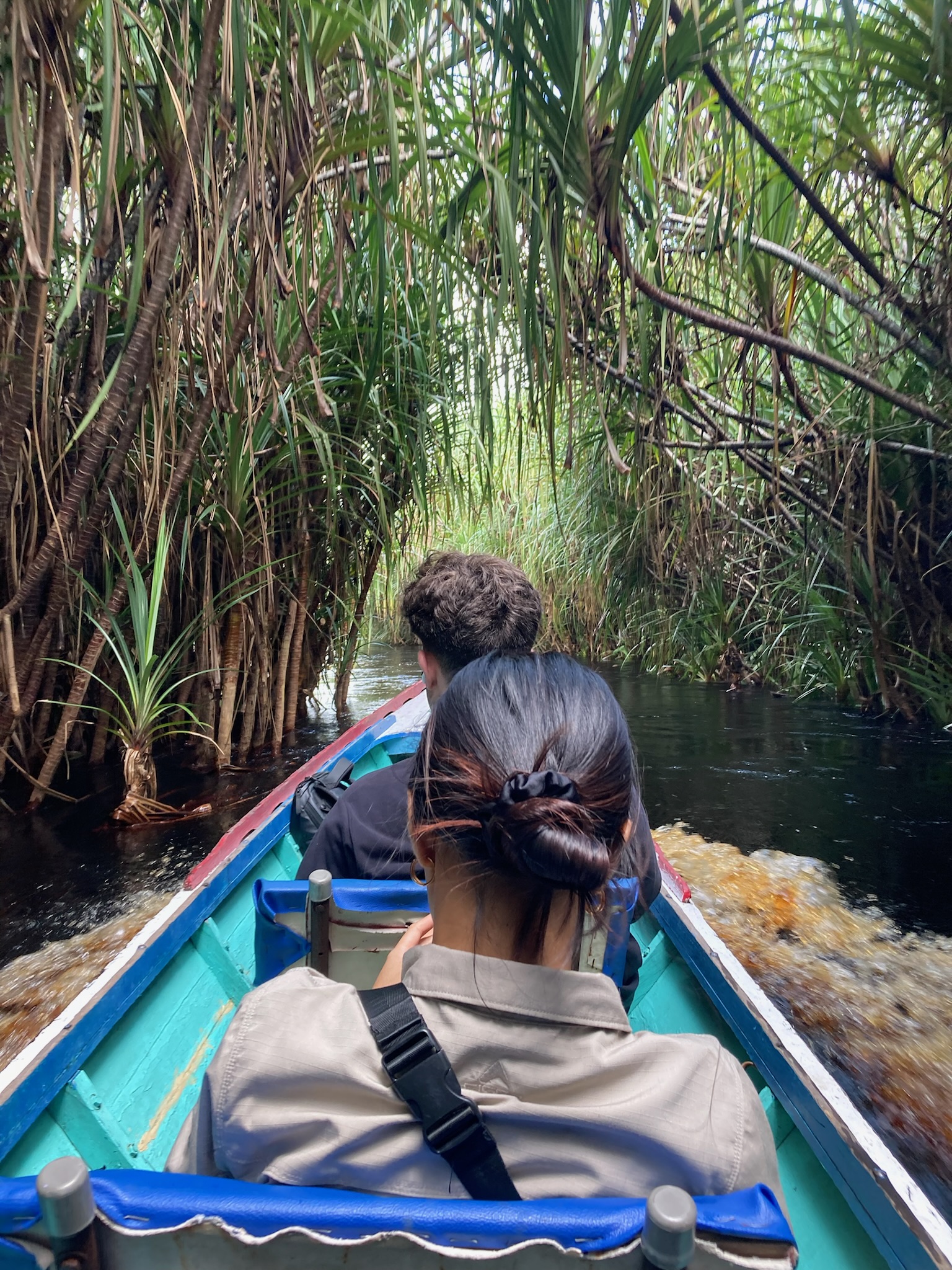
Others stay in the village, caught between selling their land or opening small mining sites just to survive. There aren’t many options left, and every day feels like a struggle to hold on.
Still, even in the middle of all this, I see people who haven’t given up—farmers replanting trees, women finding new ways to earn a living, and young people determined to protect what remains. These small acts of hope keep our spirits alive.
Kalimantan isn’t just a place rich in natural resources, it’s a home. And we’re fighting to make sure it stays that way.
Q: In your opinion, how does climate change affect daily life?
Monalisa: Climate change is something we feel every day, not just something we read about. In Kalimantan, the seasons are no longer predictable. The dry season lasts longer, and when it rains, it floods. Farmers don’t know when to plant or harvest anymore. The rivers we depend on for water and fish are drying up or being polluted.
For many of us, this means daily uncertainty, less food from the land, harder work for smaller harvests, and more expenses just to get by. When the forest burns, the smoke fills the air for weeks. People get sick, schools close, and everything stops.
But beyond the physical impact, climate change also changes how we live as a community. We see more people leaving the village to find work elsewhere, and traditions tied to the forest slowly fade.
It’s painful to see these changes happening so fast, but it also reminds us why we have to act—to protect what’s left and rebuild our relationship with nature.
Mathias: Even though we can already feel the effects of climate change here in Germany, with floods and heatwaves, we are still in a very privileged situation, as adaptation measures are already being implemented. We want to show people in Germany that the scale of the climate crisis and its impact on people in other countries is much more severe.
Q: What are your hopes for the impact that Good Forest Indonesia will have?
Monalisa: My hope for Good Forest Indonesia is that it becomes more than just an organization and grows into a movement that shows how restoring the land and improving livelihoods can go hand in hand.
We believe local communities should be at the center of restoration efforts. Reforesting degraded land isn’t just about planting trees. It’s about rebuilding lives and restoring dignity.
This won’t be easy. Change takes time, and the challenges are real. But if one day people can make a good living from sustainable agroforestry, if young people choose to stay and care for their land, and if the forest begins to heal – that will be the impact we’re striving for.
To make that happen, I hope GFI keeps moving forward, with open hearts, eyes, and ears, always willing to learn, to grow, and to improve our work despite the challenges.
Because for us, restoring the forest isn’t just environmental work. It’s personal. It’s about protecting our home.
Q: What is the main message you hope viewers will take away after watching this film?
Monalisa: I hope viewers will see that what’s happening in Kalimantan isn’t just an environmental story, it’s a human one. When the forest disappears, people lose more than trees; they lose their identity, their livelihood, their sense of belonging.
But I also hope they see the strength and hope that still exists here. Change is possible when local communities are trusted and supported to lead the way.
If viewers walk away feeling more connected to the people behind the forest (understanding that restoration is about both nature and humanity) then that’s the message I hope this film leaves behind.
Mathias: We hope viewers will understand the difficult situation many young people in the Global South face today. They are often forced to choose between protecting the environment and taking jobs that harm it just to make a living. Through this film, we want to motivate people to take action and support solutions that make it possible for everyone to protect the planet without sacrificing their livelihood.
Q: What changes does Monalisa hope to see in her “home” over the next five years?
Monalisa: Realistically, in the next five years, I want to see deforestation start to decline, and at the same time, more degraded areas restored with trees in Kalimantan. I want local communities to truly feel the impact of their hard work, to see that planting trees brings real change to their lives.
I hope to see economic improvement through agroforestry, where people can earn a good living while taking care of the land. And I hope that more and more people, from all walks of life, take part in this effort: to restore the land, to guard the forest, and to protect the place we all call home.
The experiences shared in this film underscore the urgent need for inclusive climate action that centers the voices of those most affected. By amplifying stories from the Global South, we aim to contribute to a more equitable dialogue and a more just climate future. We hope this interview offers valuable insight and encourages deeper engagement with community-driven climate solutions. We invite you to watch the full documentary and listen to Monalisa’s story firsthand on YouTube.
You are currently viewing a placeholder content from YouTube. To access the actual content, click the button below. Please note that doing so will share data with third-party providers.
More Information